


A Novel Understanding of Pandemic Disease in Preindustrial Europe (1300-1800): Combining History, Machine Learning and Natural Sciences (EUROpest)
The Challenge
Epidemics emerge from complex interactions between climate, ecology, society, and history. Understanding these dynamics is essential for improving how future pandemics are anticipated and managed. The EUROpest project, funded by ERC (European Research Council), examines how these factors shaped disease outbreaks in Late Medieval and Early Modern Europe.
Our Approach
Combining historical records, archaeology, genetics, climate science, and machine learning, the project investigates regional outbreaks of plague and other diseases across Europe to comprehend why they spread and how they affected communities. Building on resilience and actor-network theories, EUROpest utilizes an eco-bio-social framework that explains disease transmission and impacts through multiple interacting causes. EUROpest will carry out regional case studies – from Spain to Lithuania, Greece to England – to understand how context both facilitated outbreaks and also shaped them, and their short- and medium-term impacts.
Expected Impact
The project will develop and test a general model of epidemic dynamics that explains how environmental, biological, and social factors interact during disease outbreaks. Its findings will improve understanding of historical epidemics, support the creation of more realistic pandemic scenarios, and provide policymakers with stronger evidence for designing targeted and effective responses to future public health crises.
Project Leader
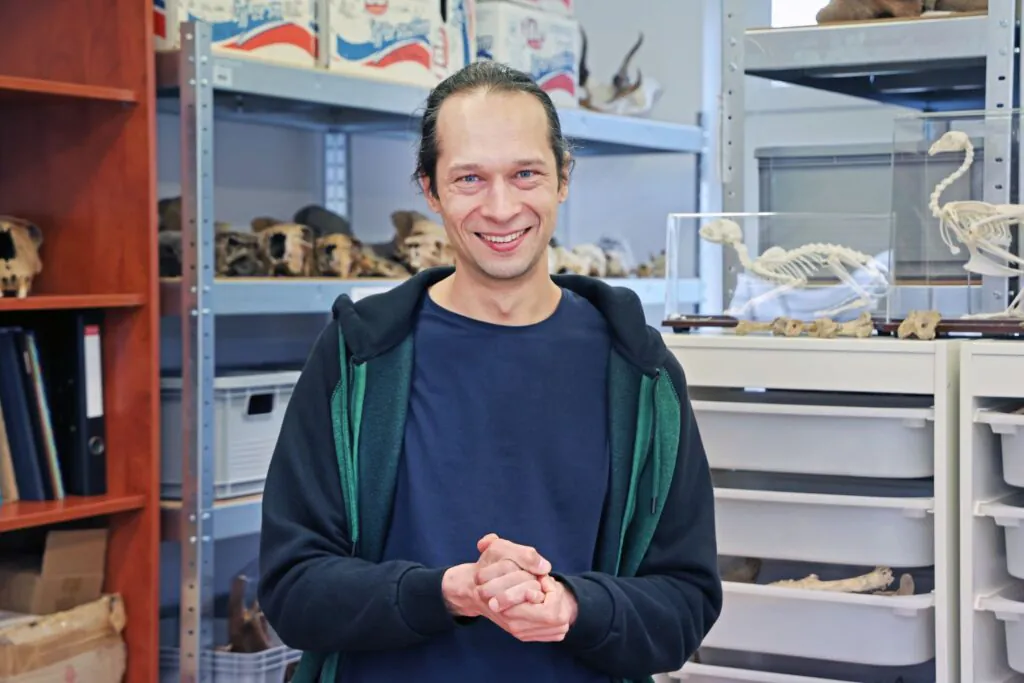
Adam Izdebski
Professor of Human Ecology
Bio:
Adam Izdebski is an interdisciplinary historian and Professor of Human Ecology at Nicolaus Copernicus University in Toruń, Poland. He serves as the corresponding Principal Investigator of the ERC Synergy Grant EUROpest.
Between 2018 and 2025, he led an independent environmental history research group at the Max Planck Institute of Geoanthropology (formerly the Max Planck Institute for the Science of Human History) in Jena, Germany. His research explores the relationships between climate change, pandemics, biodiversity, economic development, and ecological processes during the Late Holocene.
In addition to his academic work, he has contributed to several science-policy initiatives and now serves as Chair of the Group of Chief Scientific Advisors to the European Commission.