


Understanding System Collapse: crisis and recovery in the social-ecological systems of premodern Brandenburg and Greater Poland (CriSES)
The Challenge
Why did some societies succeed and survive for hundreds of years, while others became examples of decline? Why did the Polish-Lithuanian Commonwealth collapse while France overcame similar crises and emerged as a strong modern state? Finding answers to such questions requires examining multiple interacting crises rather than a single event, including political instability, institutional weaknesses, environmental change, epidemics, warfare, and economic disruption.
Our Approach
The project uses a holistic and interdisciplinary framework that combines demographic, economic, climatological, and ecological perspectives. Focusing on Brandenburg and Greater Poland between 1200 and 1800 CE, it aims to analyze population dynamics, economic activity, and human impacts on landscapes. By integrating historical, palaeoclimatic, and palaeoecological evidence, the researchers study both the causes of crises and the mechanisms that prolonged them or enabled recovery.
Expected Impact
The project advances historical research by moving beyond its current state, which has so far concentrated on simple models of crisis understood as total collapse, almost never taking into account palaeoclimatic and palaeoecological data. Through Polish-German collaboration, it provides a deeper understanding of how societies respond to complex crises and identifies the conditions that support long-term recovery, adaptation, and state stability. The German team is based at Mainz and led by Professors Jan Esper and Juerg Luterbacher.
Project Leader
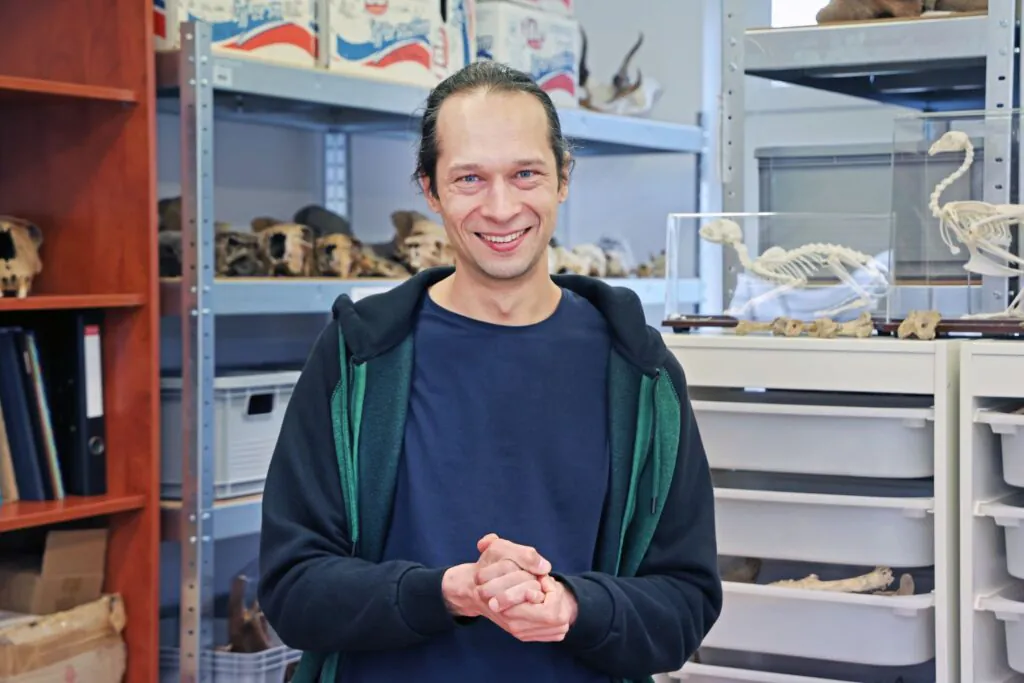
Adam Izdebski
Professor of Human Ecology
Bio:
Adam Izdebski is an interdisciplinary historian and Professor of Human Ecology at Nicolaus Copernicus University in Toruń, Poland. He serves as the corresponding Principal Investigator of the ERC Synergy Grant EUROpest.
Between 2018 and 2025, he led an independent environmental history research group at the Max Planck Institute of Geoanthropology (formerly the Max Planck Institute for the Science of Human History) in Jena, Germany. His research explores the relationships between climate change, pandemics, biodiversity, economic development, and ecological processes during the Late Holocene.
In addition to his academic work, he has contributed to several science-policy initiatives and now serves as Chair of the Group of Chief Scientific Advisors to the European Commission.