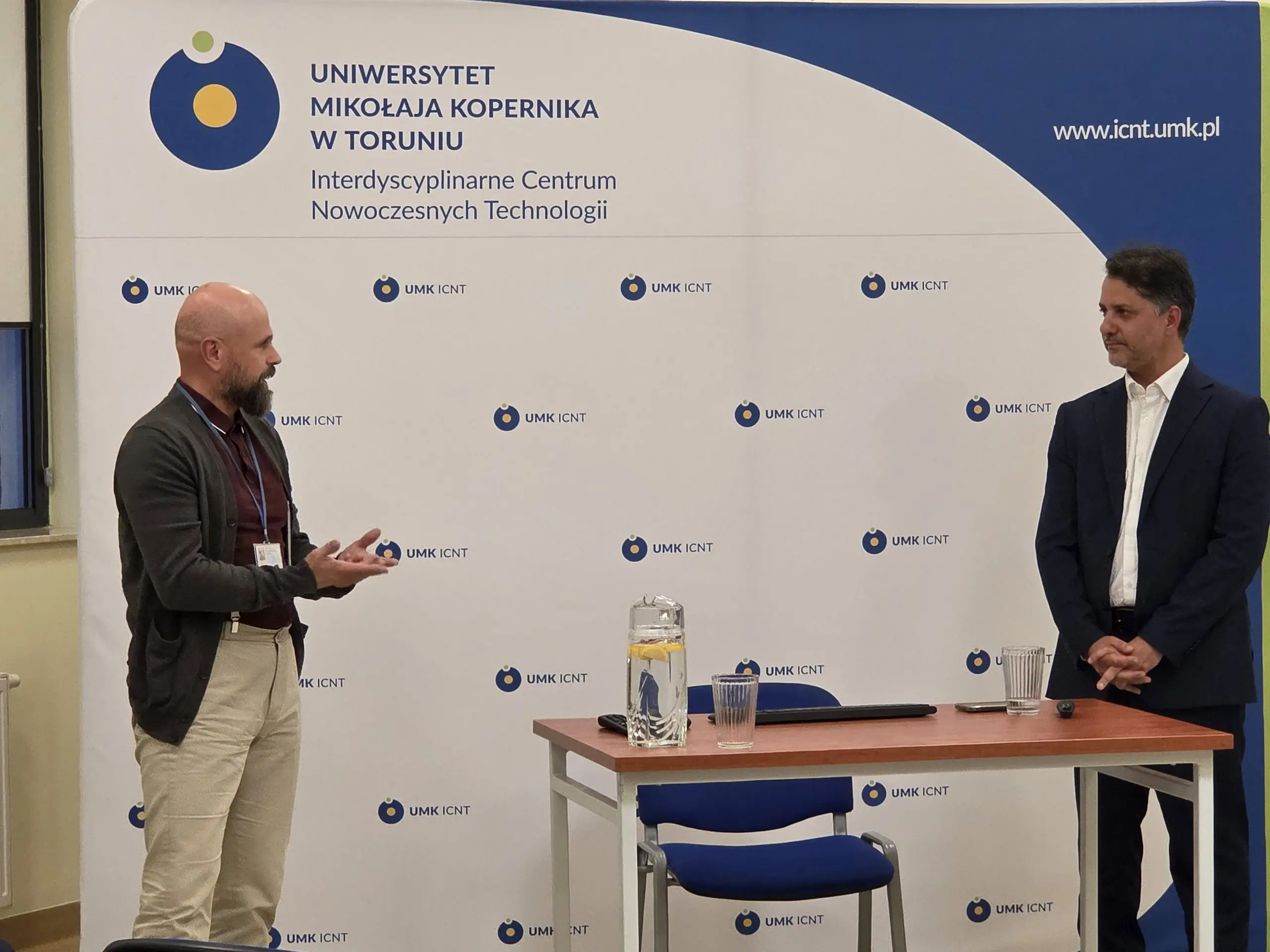

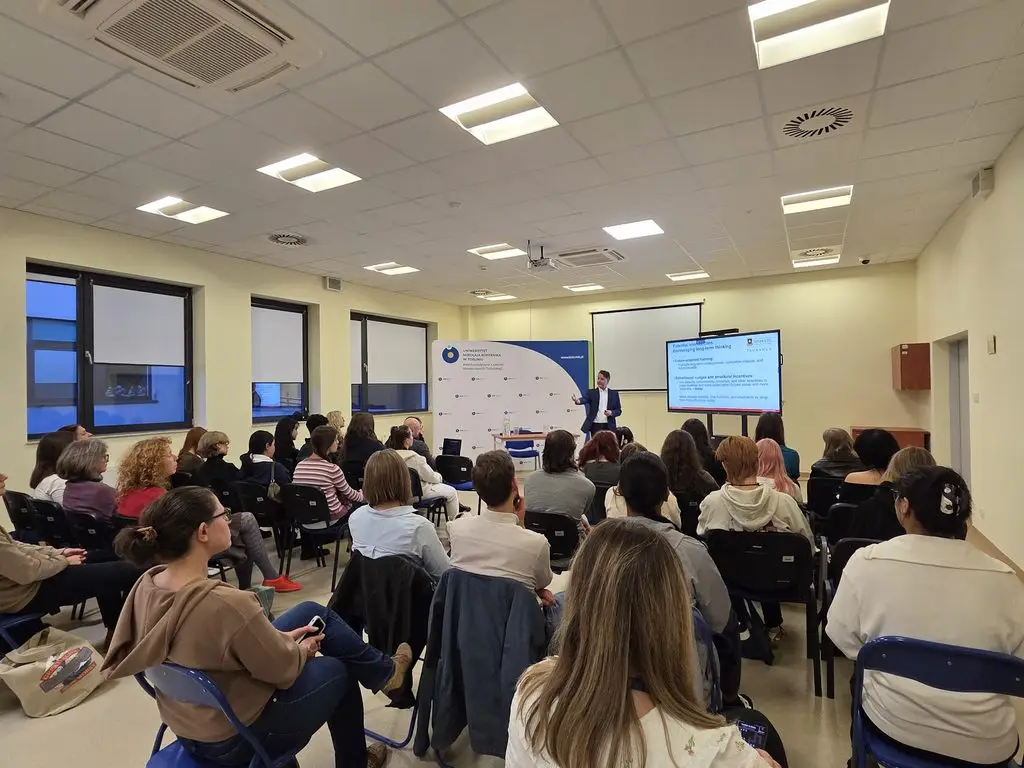
On October 14th 2026, IAS@NCU hosted the inaugural lecture of the new IAS Excellence Lectures series, under the patronage of the University’s Rector. The lecture titled “Understanding public policy through a temporal lens” was given by Prof. Taciano L. Milfont (University of Waikato, New Zealand), one of the co-authors of the “Climate Change 2022: Impacts, Adaptation and Vulnerability” report released by the Intergovernmental Panel on Climate Change (IPCC). Professor Milfont was the guest of the Copernicus Panel on Climate Change (CPCC) research team, led by Prof. Adrian Wójcik.
A short summary of the key points made by Prof. Milfont
Psychology of time
Our guest discussed how our perception of time influences our decisions and why the tendency to favour immediate rewards (present bias) hinders choices beneficial in the long term.
Self-control and health
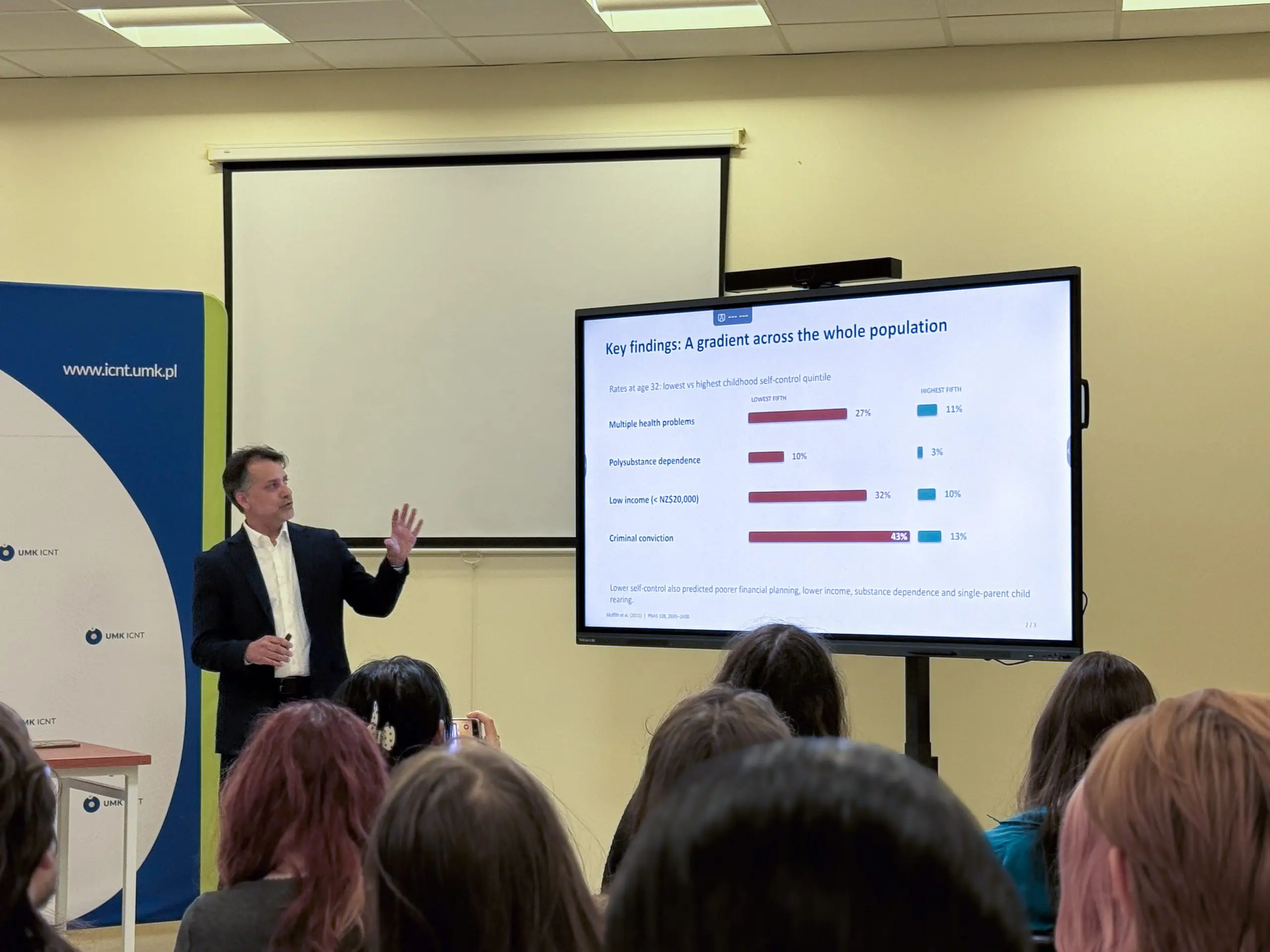
Professor Milfont presented the Dunedin Study, which showed how high levels of self-control in childhood translates into better health, vitality, as well as professional success in adult life.
Visions of the future and the environment
Climate challenges present a dilemma between the needs of present and future generations. By creating a shared, positive vision of a future society where climate change has been overcome, is one of the strongest motivators for pro-environmental action in the present.
Public policy
Professor Milfont also drew attention to the mismatch in time scales – environmental problems require planning over decades and centuries, whilst the human brain naturally thinks in terms of 4-5 years. Thus, it is vital to shift the perspective into a broader horizon, allowing for decisions and actions that affect not only humans, but also all living organisms – animals, forests, oceans.
Questions and discussions
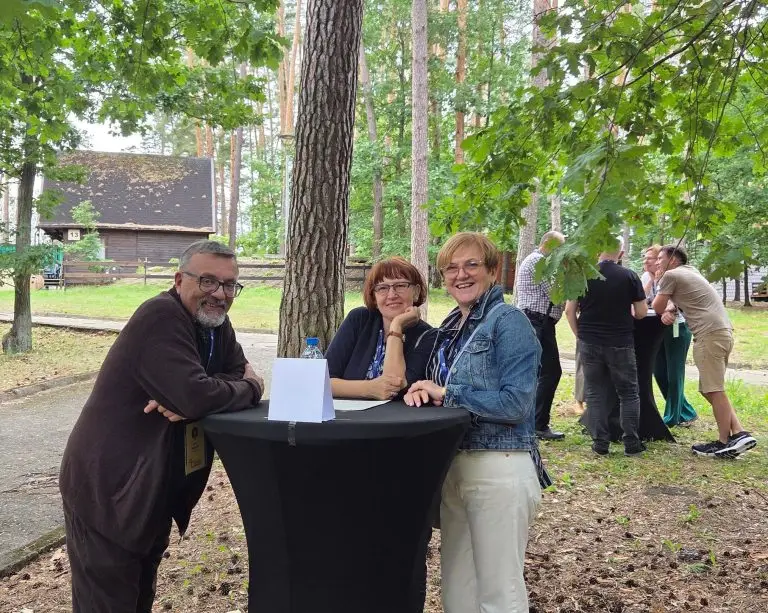
The lecture attracted widespread interest from members of our academic community. During the open part of the lecture various questions were raised, for example about the balanced time perspective, as well as anticipatory grief, amongst others. Conversations continued well beyond the lecture, allowing guests to discuss other related topics.
We would like to thank Prof. Wójcik and Prof. Milfont for organising the lecture!